|
Chaffey High School
|
|
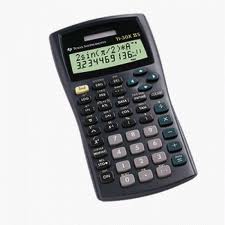
In 1999, the State of California adopted and mandated standards that affect all public high school students and their teachers. The Standards set forth the concepts, skills and topics appropriate for students going on to the study of Geometry and Algebra II and are required for high school graduation.
Originally, the state expected that each student graduating in 2004 or later would pass the California High School Exit Examination in mathematics and complete Algebra I in order to qualify for graduation. For several years, these expectations were "modified" such that the Algebra completion requirement did not take effect until 2005 and the California High School Exit Examination (CAHSEE) requirement did not take effect until 2006. Each year these expectations have been tweaked in some way as a result of legal challenges. Since the 2006-2007 school year, all students graduating from a California high school must pass the (CAHSEE), complete Algebra I and complete another year of post-algebra mathematics (usually Geometry).
My intent is that our class meets and exceeds the Standards: that it is taught in such a way as to adhere to both the spirit and the letter of those Standards.
The following is a summary of the Algebra Standards portion of the Mathematics Framework for California Public Schools. The following items will be color coded according to when they are taught in Semester 1, Semester 2, or not identified as an essential standard by our District. Those items not explicitly taught are included as time allows under current circumstances.
-
Know and use the basic properties (including closure) of the real numbers (including the subsets of integers, rational numbers, and irrational numbers).
-
Understand and know how to take the opposite, find the reciprocal, take a square root, and raise to a fractional power. Understand and know how to use the rules of exponents.
-
Understand absolute value and how to solve absolute values equations and inequalities.
-
Simplify and solve linear equations and inequalities in one variable.
-
Know how to solve multi-step problems (including word problems), involving linear equations and linear inequalities in one variable. Be able to explain each step.
-
Graph linear equations and find their x-and y-intercepts. Graph linear inequalities.
-
Be able to tell if a point lies on a line, given the equation of the line. Find linear equations by using the point-slope formula.
-
Understand how slopes relate in parallel and perpendicular lines. Find the equation of a line parallel to and perpendicular to a given line through a given point.
-
Solve a system of two linear equations in two variables (by substitution, elimination, and graphing). Solve a system of inequalities by drawing its graph.
-
Add, subtract, multiply, and divide monomials and polynomials. Solve problems (including word problems) by using these skills.
-
Be able to factor second- and simple third-degree polynomials using GCF, difference of squares, perfect squares, and grouping methods.
-
Simplify fractions with polynomials in the numerator and denominator by factoring both and reducing them to lowest terms.
-
Add, subtract, multiply, and divide rational expressions. Solve challenging problems using these methods.
-
Be able to solve a quadratic equation by factoring or by completing the square.
-
Be able to solve word problems (including rate problems, percent mixture problems, etc).
-
Know what a relation and a function are, and be able to tell if a given relation is a function.
-
Be able to find the domain and the range of a function (by graph, by set of ordered pairs, or from an equation).
-
Be able to explain why a relation (defined by a graph, by a set of ordered pairs, or by an equation) is a function or not.
-
Know how to use the quadratic formula, and how it comes from "completing the square."
-
Be able to use the quadratic formula to find the roots of quadratic equations.
-
Be able to graph quadratic equations and identify their roots as the x-intercepts of the graph.
-
Be able to tell using the discriminant whether the graph of a quadratic function will intersect the x-axis in zero, one, or two points.
-
Solve physical problems (such as motion under gravitational force) using quadratic equations.
-
Use and know simple aspects of logical argument such as the difference between deductive and inductive reasoning, hypothesis and conclusion, and use of counterexamples in proofs.
-
Use properties of the number system to judge the validity of results, to justify procedural steps, and to prove/disprove statements.
Items that I think should be standards because they contribute greater depth and perspective to Algebra and the courses that follow:
-
Study skills appropriate to mathematical development.
-
Connecting patterns to Algebra.
-
Descriptive probability and statistics.
-
Comparing and contrasting basic functions and their graphs (linear, quadratic, cubic, absolute value, square root, reciprocal, and inverse square).
-
Comparing and contrasting transformations of the basic functions (horizontal and vertical shifts, horizontal and vertical stretches, reflections and inverses).
-
Solving simple radical equations.
-
History and context appropriate to topics studied.
By statute, the standards are to be revisited and/or revised every seven years. I hope that the next seven year cycle will see the standards adjusted so that we shift away from a focus on enhanced test scores for the mere sake of those scores to a better focus on what the standards intend to accomplish in terms of how we position students for further study of and appreciation of mathematics.
If
a student has difficulty with any of the items listed above, it
is imperative that they immediately arrange tutoring sessions with Mr.
James or another person who is competent with algebra and acquainted with
these standards.
You may obtain more information from the California Department of Education's web site.